


What is HDPE? Why is it a popular material in various industries?
3 July 2024
Have you ever wondered why the plastic sheet called HDPE geomembrane, or HDPE sheet, is so popular across
so many industries? This article reveals the secrets of HDPE, a durable and versatile material, along with its properties and
benefits you shouldn't miss!
HDPE stands for High-Density Polyethylene, a type of plastic with high density and unique properties
that make it popular in many industries, including agriculture, aquaculture, wastewater treatment ponds, biogas ponds, construction, packaging
and more. Let's take a closer look at the properties that make HDPE stand out and suit so many applications.
_1776849946.png)
Properties of HDPE sheet
HDPE (High-Density Polyethylene) is a high-density plastic with properties that set it apart from other plastic sheets,
such as strength, durability and flexibility, making it popular in many industries. Its key properties are:
Strength and durability:
HDPE is very strong and durable, carries loads well and resists impact effectively. It also resists
scratches and abrasion, making it suitable for a wide range of environments.
Flexibility:
HDPE is flexible and can bend without breaking, so it adapts easily to surfaces and structures. It also
resists deformation from tension and pressure.
Long service life:
HDPE is extremely durable in a wide range of environments, giving it a longer service life than other plastics.
VSC HDPE sheet lasts more than 10 years, depending on thickness, application and correct installation,
allowing long-term use, fewer replacements and lower long-term costs.
Excellent chemical resistance:
One of HDPE sheet's standout properties is chemical resistance. Whether acids, alkalis or other chemicals, HDPE sheet
does not react in ways that cause it to degrade, making it highly suitable for chemically demanding environments such as
factory wastewater treatment ponds, landfill ponds or biogas ponds.
UV resistance:
HDPE resists UV radiation from sunlight well and does not degrade or become brittle outdoors, making it suitable for
outdoor use and sun exposure, such as water storage ponds and shrimp/fish ponds.
Temperature resistance:
It withstands a wide range of temperatures, hot or cold, without melting or deforming, making it suitable for
hot environments or intense sun.
Benefits of HDPE geomembrane in different industries
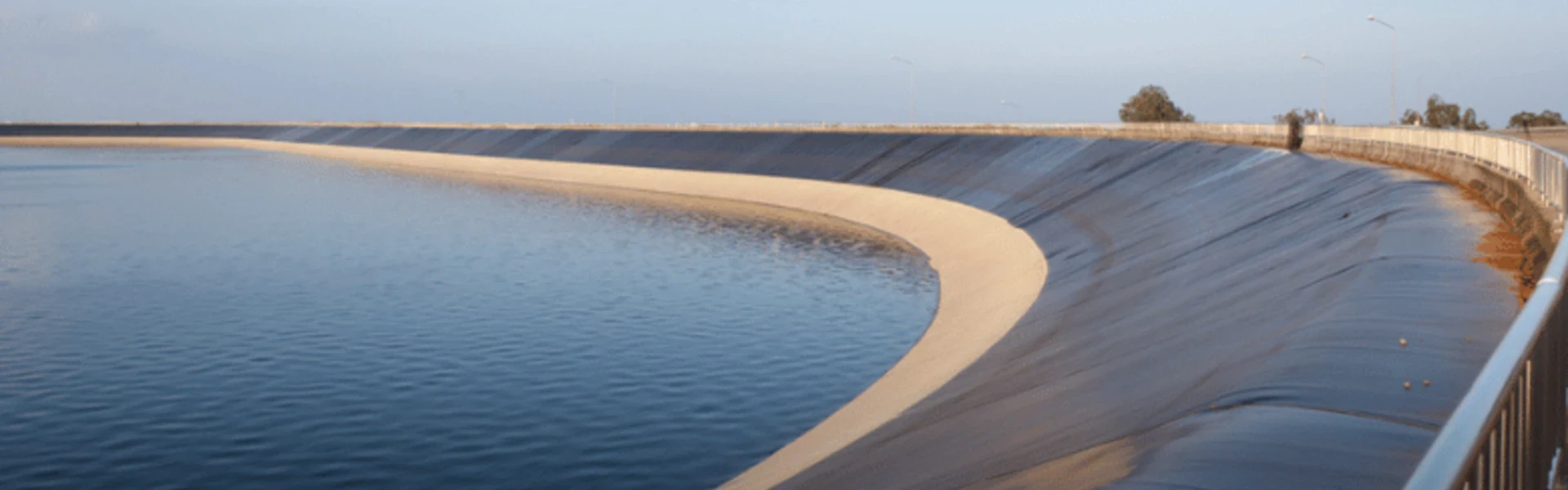
HDPE for water storage ponds
HDPE geomembrane is highly suitable for building water storage ponds, whether drinking water or farm water ponds, because
it withstands load and water pressure inside the pond and resists sun degradation when used outdoors. HDPE sheet
prevents water leakage well so water does not seep into the ground, provided it is installed correctly, and its long service life makes it
a cost-effective long-term investment, for example lining water storage ponds for durian orchards.
HDPE for aquaculture
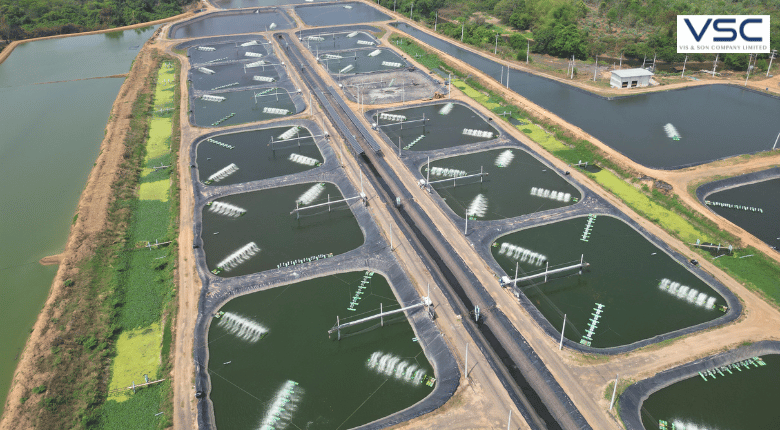
For aquaculture such as fish and shrimp farms, HDPE sheet is usually 750–1000 micron (0.75–1.00 mm) thick.
It prevents water leakage, maintains pond water levels, reduces water loss and prevents contaminants
from the soil seeping into the pond water, so water quality can be controlled and adjusted for farming. It creates an environment
that supports healthy growth, so aquatic animals grow better, stay healthy, get fewer infections and yield more,
leading to better income.
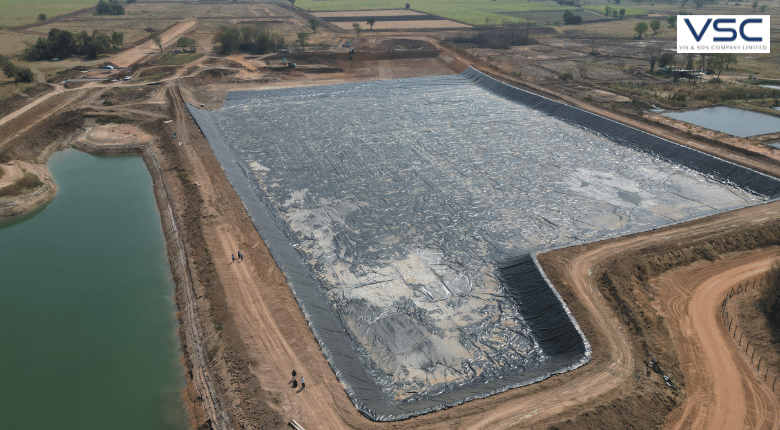
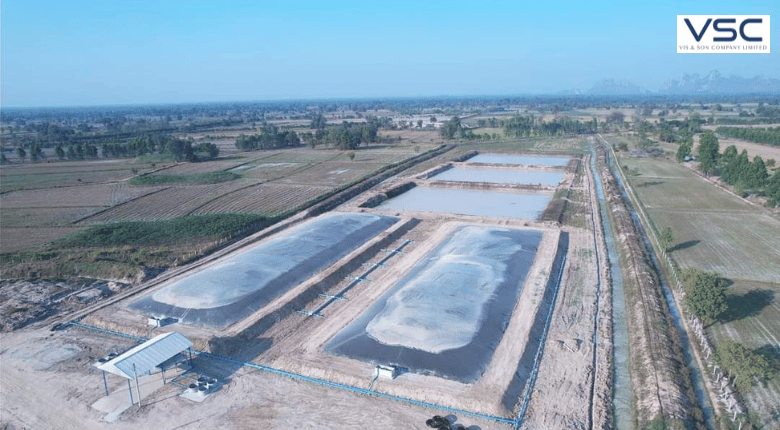
Wastewater treatment ponds
HDPE geomembrane is well suited to wastewater treatment ponds because it resists most chemicals, including acids,
alkalis and some solvents, and prevents wastewater leakage. It also withstands a wide range of temperatures, so it holds
wastewater in treatment ponds well and reduces the risk of contaminating the environment and groundwater.
Biogas ponds
HDPE geomembrane is used to line and cover biogas ponds, holding gas inside the balloon and preventing gas and liquid leaks. The gas is stored
to generate electricity for household use, greatly reducing electricity bills, and is often used on pig farms. The sheet
withstands gas pressure well and is flexible, making installation and covering of biogas ponds easy and efficient.
Salt farms
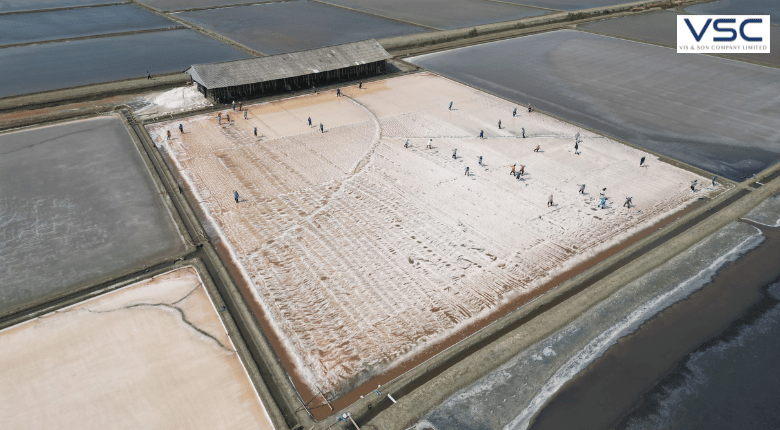
Modern salt farms often use HDPE geomembrane 1,000 micron (1.00 mm) thick or more, and it is increasingly used
to line salt pans to prevent seawater leakage and keep out dirt from the soil. Salt does not touch the soil directly, so it can
be harvested efficiently and is whiter and cleaner than salt from earth ponds, fetching better prices, especially for export.
It also reduces salt loss and increases yield in each production cycle.
How to install and maintain HDPE sheet
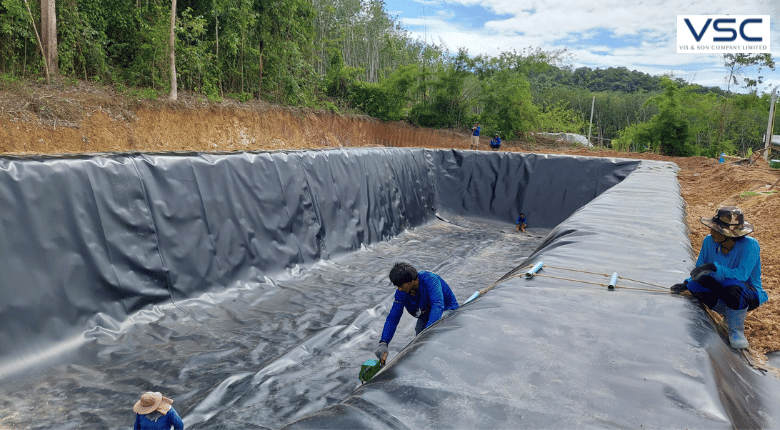
How to install HDPE sheet
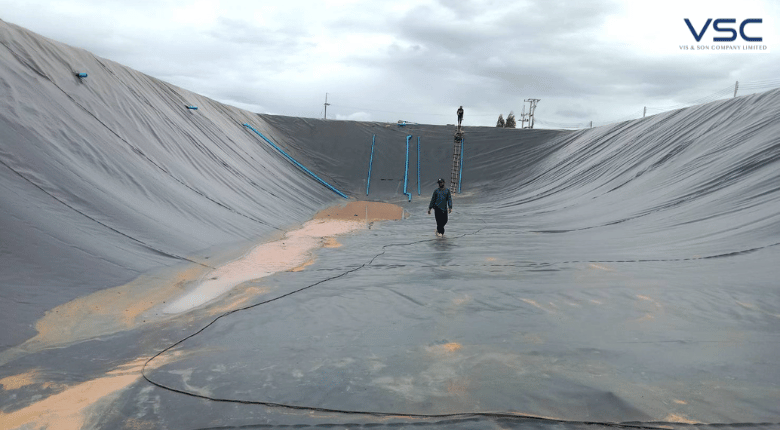
Site preparation: The area to be lined should be cleaned and levelled to reduce cracks and water seepage.
Laying the sheets: Overlap 2 HDPE sheets smoothly and cover every gap to prevent water or chemical leaks.
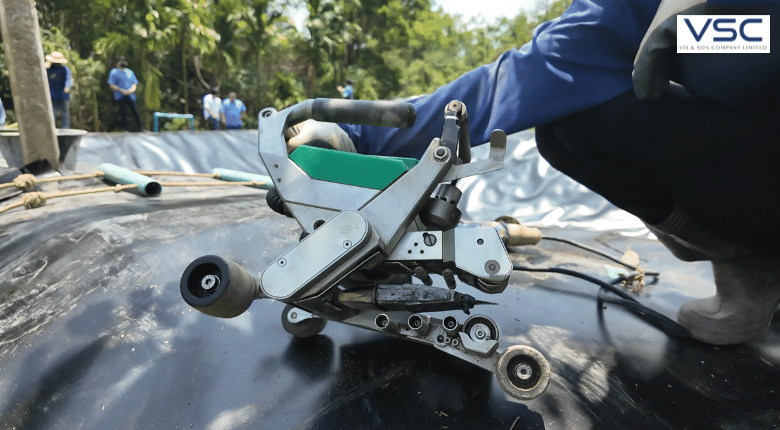
Joining: Use a hot-wedge welding machine to weld the 2 overlapping HDPE sheets firmly together
and prevent leaks. HDPE welding needs the right heat and pressure for a tight, durable seam.
How to install HDPE with a welding machine: https://vt.tiktok.com/ZSYxFmQsU/
Maintaining HDPE sheet
Cleaning: Clean HDPE sheet regularly to prevent build-up of dirt and contaminants that could degrade it.
Inspection: Inspect HDPE sheet periodically to find and repair leaks or damage, ensuring it keeps performing.
HDPE sheet compared with other materials
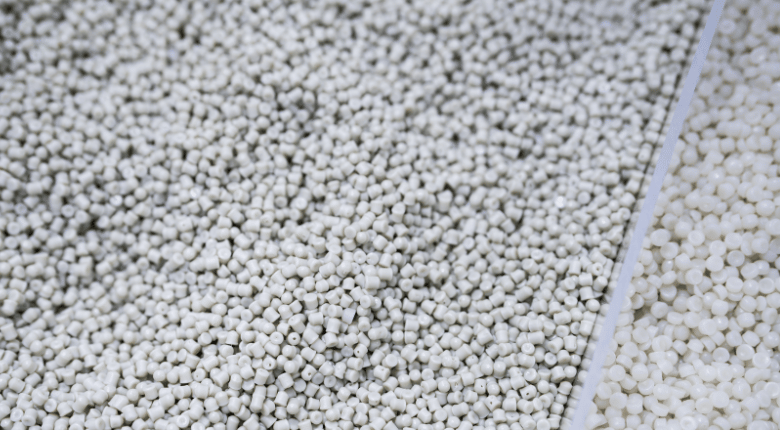
► HDPE sheet vs. PVC
Strength: HDPE is stronger and more durable than PVC, suiting applications that need more durability.
Chemical resistance: HDPE resists chemicals better than PVC, so it can be used in chemically demanding environments.
Price: HDPE may cost more than PVC but lasts longer, making it better value as a long-term investment.
► HDPE sheet vs. LDPE
Strength: HDPE geomembrane is usually thicker, from 500 to 2000 micron (0.50–2.00 mm),
so it is stronger and more durable than LDPE sheet, which is usually thinner. LDPE sheet therefore suits some jobs, such as water storage ponds
and shrimp farms, while HDPE geomembrane suits jobs that need more strength, durability and puncture resistance,
such as wastewater treatment ponds and biogas ponds.
Applications: The right material depends on your needs and the nature of the job. HDPE and LDPE have
different properties and uses: HDPE is strong and durable, suiting applications that need strength and
high chemical resistance, while LDPE is more flexible, lighter and cheaper. The two are
therefore used in clearly different ways.
Frequently asked questions about HDPE sheet
► What is HDPE sheet suitable for?
HDPE sheet suits many industries, such as agriculture, aquaculture, construction and packaging, because
it is durable and versatile.
► What thicknesses does HDPE come in?
HDPE thickness starts at 0.50–2.00 mm (500–2000 micron). The right thickness depends on the job and
budget. For example, water storage ponds may suit 0.50–1.50 mm (500–1500 micron), depending on ground conditions and pond size,
while wastewater treatment ponds or biogas ponds usually start at 1.00–2.00 mm (1000–2000 micron),
also depending on site preparation.
► How much does HDPE cost?
HDPE sheet prices usually vary with the market price of the main raw resin, as well as the area and thickness required.
For more information, please contact us on LINE: @visandson
► What is the international standard for HDPE?
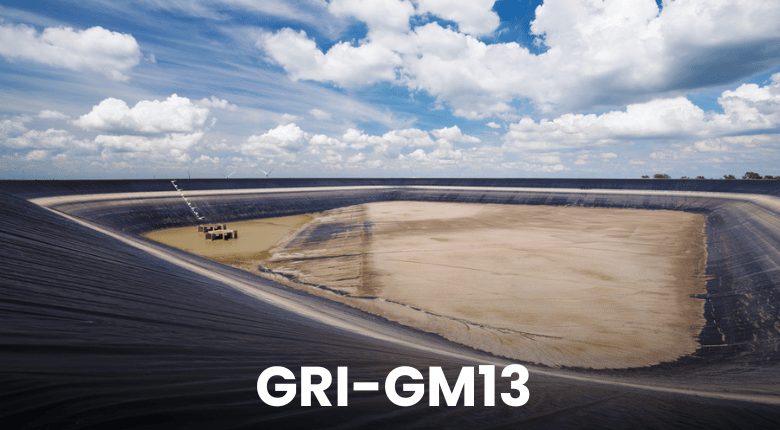
The HDPE standard is GRI-GM13, a key standard for producing and using the sheet. GRI-GM13 measures
various properties, including:
1. Thickness
2. Density
3. Tensile Properties
4. Elongation
5. Puncture Resistance
6. Tear Resistance
7. Stress Crack Resistance
8. Carbon Black Dispersion
9. Carbon Black Content
10. Oxidative Induction Time (OIT), both standard OIT and high-pressure OIT
11. Oven Aging
12. UV Resistance
Conclusion
HDPE geomembrane is a durable material used in many industries, such as water storage, aquaculture, wastewater treatment,
landfills, biogas ponds, mining and salt farms. With its strength, flexibility, chemical resistance and resistance to
temperature changes, HDPE sheet saves costs in the long run and improves efficiency, while also being environmentally
friendly. If you need a high-quality, versatile material, VSC HDPE geomembrane is a great choice for you.
Thank you for reading. We hope this article has given you useful information about HDPE.
Share this post




 02 316 3384