


How to Choose Pond Liner Thickness for Fish & Shrimp Ponds
7 August 2026
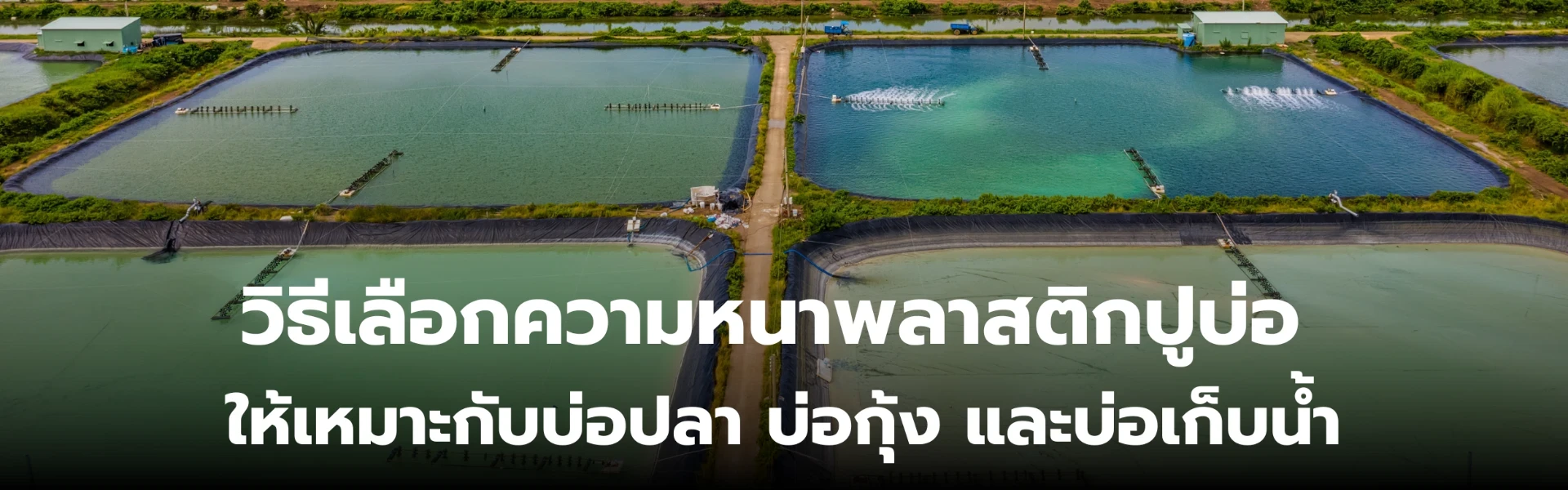
Pond liner reduces water leakage, separates water from the soil and makes ponds easier to clean. But choosing the right pond liner isn't just about size or price, because "thickness" is another key factor that directly affects strength, durability and service life.
If the liner is too thin for the pond size, depth and ground conditions, it may tear or be punctured by sharp objects easily. On the other hand, liner that is thicker than necessary raises costs and makes installation harder.
So before buying, consider the pond type, site conditions, service life and installation method together to get the most suitable, best-value pond liner.
How is pond liner thickness measured?
The thickness ofpond lineris usually stated in "microns". 1,000 microns equals 1 millimetre. For example:
- 150 micron = 0.15 mm
- 200 micron = 0.20 mm
- 300 micron = 0.30 mm
- 500 micron = 0.50 mm
VSC aquaculture pond liner film is made from heavy-duty LDPE. It is highly flexible, follows curved pond shapes and comes in 150, 200, 300 and 500 micron thicknesses, suitable for fish ponds, shrimp ponds and farm water storage ponds.
However, liners of the same thickness can have different properties, depending on the raw material, formulation, sheet uniformity, elongation and UV protection, so don't judge by the thickness figure alone.
Is thicker pond liner always better?
Generally, thicker liner resists tension, tearing and puncture better, but that doesn't mean you need the thickest liner for every job.
Small ponds with smooth floors and short-term use may not need very thick liner, while large or deep ponds, or areas at risk from stones, roots and ground subsidence, need stronger material.
Choosing the right thickness means considering several factors:
- Pond size and depth
- Pond type and the animals farmed
- Ground conditions under the pond
- Required service life
- Exposure to sunlight and weather
- Machinery or equipment used in the pond
- Installation method and floor preparation
- Risk from sharp objects and ground movement
Pond liner thickness guide table
The table below is a starting guide for choosing LDPE pond liner film, not a fixed rule, as every site is different.
| Thickness | Typical use | Watch out for |
|---|---|---|
| 150 micron | Small, shallow ponds with smooth floors, or short-term use | The floor must be smooth and free of sharp objects |
| 200 micron | Small to medium fish ponds and water storage ponds | Not suited to rough ground or high impact |
| 300 micron | Fish ponds, shrimp ponds and water storage ponds in continuous use | Anchor the edges and handle seams correctly |
| 500 micron | Large or deep ponds, or areas at risk of tearing | Heavier and needs careful installation |
For very large ponds, wastewater treatment, industrial work or projects that need serious leak control, consider HDPE geomembrane and have experts design the specification instead of using a general table.
How to choose liner thickness for fish ponds
Fish ponds range from small backyard ponds and nursery ponds to commercial fish ponds, so choose thickness based on pond size, depth and service life.
Small or temporary fish ponds
For small ponds with smooth floors, no stones or roots, and no long-term use, you could start with pond liner of about 150–200 micron.
Liner of this thickness is light, easy to transport and fits pond curves easily, but the floor must be carefully prepared, as a single stone, branch or sharp object can puncture it.
General-use fish ponds
For small to medium fish ponds in continuous use, start with pond liner of about 200–300 micron to increase tensile strength and reduce the risk of tearing during installation.
If the pond floor is rough or at risk of subsidence, choose thicker material or add a geotextile layer underneath before laying the liner.
Commercial or large fish ponds
Commercial fish ponds must handle continuous use, pumping, cleaning and more activity than ordinary ponds, so start with about 300–500 micron, assessed together with depth and ground conditions.
For very large ponds or those at high risk of leakage, HDPE geomembrane may be more suitable than ordinary LDPE film.
How to choose liner thickness for shrimp ponds
Shrimp ponds are usually used more heavily than fish ponds, as water quality must be controlled, aerators are used, water is circulated and the pond floor must be cleaned between cycles, so liner strength is very important.
Nursery and small shrimp ponds
For nursery or small ponds with a well-prepared floor, consider liner of about 200–300 micron. Pay special attention to water pipes, inlets/outlets and corners, as these are points where the liner can be stressed or damaged easily.
Shrimp ponds in continuous use
For shrimp ponds used over many cycles, start with liner of about 300–500 micron to handle cleaning, water circulation and the risk from equipment in the pond.
VSC notes that using PE liner in shrimp ponds reduces contamination from the soil, prevents sediment, reduces soil slippage at the pond edges and makes cleaning and preparing the pond for the next cycle easier.
However, choose thickness for shrimp farms based on the farming system, pond size, water level, aerator positions and sludge removal method together, not just the area.
How to choose liner thickness for water storage ponds
Farm water storage ponds range from small garden ponds and dry-season reserve ponds to large reservoirs, so liner thickness must match the water volume and storage period.
Small water storage ponds
For small, shallow water storage ponds with a well-prepared floor, you could start with liner of about 200 micron.
For temporary ponds or seasonal water storage, this thickness may be enough, but keep animals, tools and branches from touching the sheet directly.
Medium water storage ponds
Farm ponds that hold water all year should start at about 300 micron for added strength and to handle changing water levels.
If the soil subsides easily, the floor is stony or groundwater pushes up, consult an expert, as you may need drainage or gas venting under the liner.
Large water storage ponds
For large or deep ponds, or ponds critical to production, start with 500 micron liner or switch to HDPE geomembrane designed specifically for projects.
VSC offers HDPE geomembrane from 0.50 to 2.00 mm thick for water storage ponds, aquaculture, wastewater treatment ponds, biogas ponds and other leak-control applications, manufactured to GRI-GM13 specifications.
Is 500 micron LDPE the same as 0.50 mm HDPE?
Although 500 micron LDPE and 0.50 mm HDPE have the same thickness figure, the two materials do not have the same properties.
LDPE is soft and highly flexible, so it fits curved pond shapes easily and suits fish ponds, shrimp ponds and general water storage ponds. HDPE is stiffer and resists tension, tearing, chemicals and permeation better, so it is often used in projects and large areas.
HDPE geomembrane must be installed by welding the sheets together, and the welds should be quality-checked, while LDPE film is easier to fit to pond shapes on smaller jobs.
So don't choose material by thickness alone; consider the plastic type and the application too.
Factors to consider besides thickness
1. Raw material quality
Liner made from quality raw materials is tougher, more flexible and more uniform. Substandard raw materials can make parts of the sheet brittle or uneven in thickness.
2. UV resistance
Outdoor pond liner is exposed to sunlight all the time, so choose products with UV stabilizers to slow sun degradation.
VSC pond liner film is made from heavy-duty LDPE suited to outdoor use, designed to be flexible for fitting to pond shapes.
3. Ground conditions under the pond
Pond floors with sharp stones, roots, construction debris or uneven surfaces increase the risk of puncture, even with very thick liner.
NRCS pond lining standards recommend a protective cushion layer between the liner and stones or sharp materials that could cause damage, such as non-woven geotextile or a suitable soil layer.
4. Pond size and depth
Large or deep ponds put more pressure and tension on the material, especially on side slopes, corners and pipe connections, so choose a thickness and installation method that can handle these forces.
5. Service life
Temporary ponds and ponds used continuously for many years should not use the same specification. For long-term use, prioritize raw material quality, thickness, UV resistance and installation over the lowest price.
How to prepare the pond floor for a long-lasting liner
However thick the liner, if the floor is not prepared correctly it can still leak or tear. Before installation:
Remove sharp materials
Clear stones, branches, roots, metal scraps, glass and construction debris from the floor and side slopes.
Level and compact the floor
The pond floor should be smooth and evenly compacted, with no holes or bumps that put point loads on the liner. If the soil subsides easily, improve it before installation.
Use an underlay in risky areas
Where there are many stones or the floor cannot be smoothed enough, lay fine sand or geotextile first to reduce friction and stop sharp objects puncturing the liner.
Don't stretch the liner too tight
Allow slack for expansion, temperature changes and ground settlement. If the sheet is too tight, it may tear at corners or edges when the pond is filled.
Anchor the liner edges securely
Dig an anchor trench around the pond edge and bury the liner using the right method, to prevent wind lifting it, the sheet slipping or edges pulling out when the water level changes.
Mistakes when choosing pond liner thickness
Common mistakes that make liner fail sooner than it should:
- Choosing liner on lowest price
- Using thin liner for large or deep ponds
- Not checking the raw material type and quality
- Not choosing UV-resistant liner
- Not removing stones and sharp objects from the pond floor
- Assuming thick liner prevents all punctures
- Stretching the liner too tight during installation
- Not allowing extra for depth and the anchor trench
- Placing pumps or heavy equipment directly on the liner
- Using ordinary pond liner film for projects that need HDPE geomembrane
Summary: how many microns should your pond liner be?
There is no single thickness that suits every site. As a starting guide:
- 150–200 micron Small, shallow ponds with smooth floors, or short-term use
- 200–300 micron Small to medium fish ponds and water storage ponds
- 300–500 micron Shrimp ponds, commercial fish ponds and ponds in continuous use
- 500 micron or more, or HDPE geomembrane Large or deep ponds, industrial work and projects that need long-term leak control
These figures are only a starting point. The actual specification should consider pond size, depth, soil conditions, use and installation method together. For large or production-critical ponds, have an expert assess the site before ordering.
Choose the right pond liner for your use with VSC
VSC manufactures and sells heavy-duty LDPE aquaculture pond liner film in 150, 200, 300 and 500 micron thicknesses for fish ponds, shrimp ponds and water storage ponds, plus HDPE geomembrane for large ponds and projects that need high strength.
Consult the VSC team to assess the right material type, thickness, width and length for your pond, reducing the risk of choosing liner that is too thin or thicker than necessary, and getting better long-term value.
Share this post


 02 316 3384